
.svg)






%201.png)
In 2025, having a business website is no longer optional. Your website is the heart of your brand, shaping how customers see and trust your business online.
Ready to take your business website design to the next level? This guide is here to help you create a site that stands out, attracts your ideal customers, and drives real results.
We'll walk you through every step, from defining your website's purpose to choosing the right platform, planning your structure, creating engaging content, and making sure your site is optimised for SEO and mobile.
Let’s get started and build a powerful online presence together.
Define Your Website’s Purpose & Goals
Setting a clear direction is the first step to a successful business website design. Without a well-defined purpose, your website can easily become unfocused and fail to deliver results. Understanding why your business needs a website and what you want it to achieve ensures every design decision supports your goals. If you want to learn more about why this matters, check out this helpful article on the Importance of Web Design for Business.

Identify Your Core Business Objectives
Before you start your business website design, ask yourself what the website must achieve for your business. Is your main aim to generate leads, sell products through eCommerce, boost brand awareness, or provide client support? Each objective points your website in a different direction.
Align your website goals with your overall business strategy for the best results. For example, a portfolio site should focus on showcasing your work, while an eCommerce website needs to make sales easy and appealing.
By defining these objectives early, you create a strong foundation for your business website design and give your project a clear sense of purpose.
Understand Your Target Audience
A powerful business website design is built around the needs of your audience. Start by researching who your visitors are: their age, location, job role, and challenges. Use surveys, interviews, or analytics to uncover what your audience values most.
Tailor your messaging, visual style, and features to solve their problems and speak their language. For instance, B2B audiences often want detailed information and case studies, while B2C visitors might prefer quick benefits and easy navigation.
By understanding your target audience, your business website design will feel more personal and deliver a better user experience.
Set SMART Goals for Success
To measure the impact of your business website design, set SMART goals: Specific, Measurable, Achievable, Relevant, and Time-bound. This approach turns broad ambitions into clear targets you can track and celebrate.
For example, rather than saying "get more enquiries," set a goal like "increase online enquiries by 30% in six months." This gives your team direction and motivation.
Remember, aligning your website’s purpose with real user needs is key to long-term success. Setting the right goals keeps your business website design on track and focused on results.
Choose the Right Platform & Technology
Choosing the right platform and technology is a crucial step in business website design. The choices you make here set the foundation for everything that follows, from usability to scalability. Let's break down the essentials so you can make confident, future-proof decisions.

Evaluate Popular Website Platforms
When it comes to business website design, your platform choice impacts everything from day-to-day management to long-term growth. Here is a quick comparison:
PlatformEase of UseScalabilityCustomisationIntegrationsWordPressHighExcellentExtensiveVastShopifyVery HighHighModerateStrongWixVery HighModerateGoodDecentSquarespaceHighModerateGoodDecentCraft CMSModerateExcellentExtensiveAdvanced
WordPress powers over 37 percent of all websites, making it a leading choice for versatility and control. Shopify excels in eCommerce, while Wix and Squarespace offer simplicity for smaller projects. Craft CMS is ideal for bespoke solutions in business website design.
Assess Features for Business Growth
Look for features that will help your business website design support your goals. Prioritise quick setup, responsive design, built-in analytics, workflow management, and pricing flexibility.
For eCommerce, Shopify stands out with streamlined sales tools and secure payment options. WordPress, paired with plugins, is perfect for content-rich sites. Want to dive deeper into eCommerce considerations? Check out Ecommerce Web Design and Development for expert insights.
Choosing the right feature set ensures your business website design can adapt as your needs evolve.
Plan for Scalability & Future-Proofing
Thinking ahead is essential for business website design. Select platforms that can grow with your company, supporting more products, content, or users as your ambitions expand.
Consider options like headless CMS or modular systems if you anticipate rapid growth or integration with new technologies. This proactive approach keeps your business website design flexible and ready for change.
Ensure Security & Compliance
Security is non-negotiable in business website design. Choose platforms with strong security measures, regular updates, and GDPR compliance.
Key considerations include:
- SSL certificates for encrypted data
- Automated platform updates
- GDPR-ready privacy controls
- Reliable backup systems
Prioritising these features builds trust with visitors and keeps your business protected.
Plan Site Structure & User Experience (UX)
Building a successful business website design starts with a strong foundation. The way you organise your site and guide users shapes your brand’s reputation, drives conversions, and keeps visitors coming back. Let’s break down the essentials of site structure and user experience.
Map Out Core Pages & Navigation
Every effective business website design begins with a clear map of core pages. At a minimum, include a Homepage, About, Services or Products, Contact, Blog, and essential legal pages like Privacy Policy and Terms & Conditions.
Organise your menu so users can find what they need without confusion. Keep navigation logical and intuitive—group related pages and use clear labels. Studies show that users form an opinion about a website within seconds. According to Website First Impression Statistics 2025, first impressions are shaped by design and navigation, directly influencing engagement and bounce rates.
A well-structured business website design makes it easy for visitors to explore, increasing the chances of turning them into loyal customers.
Design for User Journeys & Conversion
Think of your business website design as a guided tour. Plan user journeys so visitors can easily reach key goals like making an enquiry or purchase.
Strategically place calls-to-action (CTAs) on every page—invite users to “Contact Us,” “Get a Quote,” or “Buy Now.” Use contrasting colours and clear wording to make CTAs stand out. Mapping these journeys helps reduce friction and boosts conversions.
By considering the needs and motivations of your audience, you ensure your business website design is both welcoming and effective.
Prioritise Mobile Responsiveness
With over 60% of website traffic coming from mobile devices, mobile responsiveness is a non-negotiable aspect of business website design.
Choose responsive layouts so your site looks great on every screen size. Buttons and menus should be easy to tap, and images must load quickly without losing quality. Test your business website design on multiple devices to guarantee a seamless experience for all users.
When your site adapts smoothly, you keep visitors happy and engaged, no matter how they browse.
Accessibility & Inclusivity Best Practices
A truly inclusive business website design welcomes everyone. Follow WCAG guidelines—add alt text to images, enable keyboard navigation, and choose readable fonts and colour contrasts.
These simple changes not only broaden your reach but also help you meet legal compliance standards. By making your business website design accessible, you show care for all users and build lasting trust.
Futur Media: Expert Business Website Design
As a Cardiff-based creative agency, Futur Media brings expertise and a personal touch to business website design. Specialising in platforms like Shopify and Craft CMS, their team blends bespoke design, UX best practices, and conversion-focused strategies.
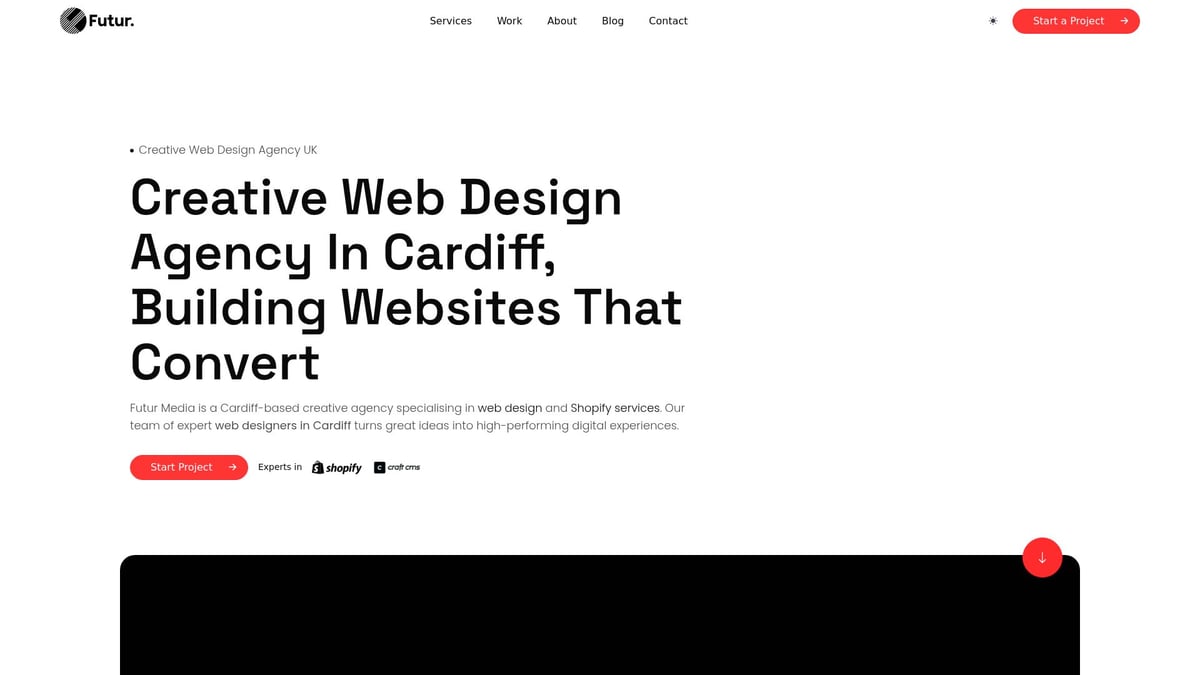
Futur Media’s approach ensures your business website design is tailored for growth, providing UK businesses with a powerful online presence.
Craft Compelling Content & Visual Identity
Your content and visual identity set the stage for how visitors feel about your business website design. Great design and messaging work together, drawing people in and building trust from the very first click. Let’s explore how to get these foundations right.

Develop Brand-Aligned Messaging
Start with a clear definition of your brand’s tone and voice. Is your business website design bold and energetic, or calm and professional? Pinpoint your value proposition and ensure every sentence reflects what makes your brand special.
Keep your messaging consistent across all pages. Use testimonials, crisp product information, and short case studies to support your claims. For example:
- “Our clients save 20% on average after switching to us.”
- “See how we transformed a local retailer’s sales in just three months.”
Consistent, authentic messaging helps your business website design stand out and connect with visitors.
Use High-Quality Visuals & Media
First impressions matter, so invest in custom visuals for your business website design. Swap out generic stock imagery for branded graphics, professional photos, and engaging videos. Unique visuals not only look professional but also communicate your story and values.
If you’re searching for inspiration, check out Creative Agency Website Examples to see how leading agencies showcase their work.
- Ecommerce sites benefit from detailed product images and demo videos.
- Portfolios shine with before-and-after galleries and project showcases.
Quality visuals support your messaging, making your business memorable and trustworthy.
Structure Content for Engagement & SEO
A successful business website design uses clear structure to keep visitors engaged. Break up information with headings, bullet points, and short paragraphs. This makes your content easier to scan and digest.
Strategically place keywords where they feel natural. Use concise language and avoid jargon. Incorporate internal links to guide users to important sections, boosting both SEO and user experience.
Remember, a well-structured site helps search engines understand your content, giving your business website design an extra advantage.
Build Trust with Social Proof & Case Studies
Trust is at the heart of every great business website design. Showcase real testimonials, customer reviews, and certifications to demonstrate your credibility.
Feature client logos or case studies that highlight your expertise and results. For example, share a story about how you solved a client’s challenge or helped them grow. According to Adobe, testimonials can significantly increase conversion rates.
Social proof reassures new visitors that they are in safe hands with your business.
Maintain Consistency & Professionalism
Consistency is key for a polished business website. Stick to your brand colours, fonts, and logo across every page. This visual unity reinforces brand recognition and makes your site feel reliable.
Make sure every element looks and feels cohesive, from buttons to backgrounds. A professional business website design builds trust and keeps visitors coming back.
Optimise for SEO, Speed & Mobile
Creating a successful business website design means going beyond good looks. To truly compete in 2025, your site must be visible, fast, and seamless on every device. Let’s explore how to optimise your site for search engines, lightning speed, and mobile users.
On-Page SEO Fundamentals
Strong on-page SEO is the foundation of business website design success. Start with keyword research to understand what your audience is searching for. Use those keywords naturally in your meta titles, descriptions, and header tags.
Break up content with headings and bullet points for readability. Don’t forget to add image alt text for accessibility and SEO. Internal linking between relevant pages boosts both authority and user navigation. For a step-by-step approach, you can check recent Web Design Statistics 2025 for insights on what’s working now.
Technical SEO & Performance
Technical SEO ensures your business website design runs smoothly behind the scenes. Focus on these essentials:
- Fast-loading pages (aim for under 3 seconds)
- Clean, efficient code
- SSL certificates for HTTPS security
- XML sitemaps for search engines
Did you know users are likely to leave if your site takes longer than three seconds to load? Regular audits and performance checks will help you keep everything running at its best.
Mobile-First Design Principles
With most users now browsing on mobile, your business website design must prioritise mobile-first principles. This means responsive layouts that adjust to any screen size and touch-friendly buttons and menus.
Optimise images for quick mobile loading without sacrificing quality. Ensure navigation is simple and accessible on smaller screens. Remember, mobile usability is key to both user satisfaction and search engine rankings.
Content Optimisation for Search & Users
Optimising your content is vital for business website design. Use schema markup to help search engines understand your pages. Add FAQs and aim for featured snippets to increase your site’s visibility.
Update content regularly to stay relevant and meet user needs. Use concise paragraphs, clear headings, and natural keyword inclusion to keep readers engaged and search engines happy.
Monitor & Improve with Analytics
Analytics are essential for continuous improvement in business website design. Integrate tools like Google Analytics, Search Console, and heatmaps to track site performance and user behaviour.
Review this data often to spot trends and identify areas for improvement. Fix issues quickly and test changes to see what works best. A data-driven approach will keep your website growing and performing at its peak.
Integrate Essential Features & Tools
Integrating essential features and tools is what turns your business website design from a digital placeholder into a high-performing asset. These elements are the building blocks that support user engagement, lead generation, and long-term growth. Let’s explore the must-have features for a successful site.
Contact & Lead Generation Elements
For effective business website design, making it easy for visitors to connect is crucial. Prominent contact forms should be visible on key pages, inviting users to make an enquiry or request a quote.
- Include click-to-call buttons for mobile users.
- Add live chat for instant support and quick responses.
- Use clear call-to-action (CTA) buttons to guide users.
Simple, accessible contact options can significantly increase conversion rates. Remember, the easier it is for someone to reach you, the more likely they are to become a customer.
eCommerce & Payment Solutions
If your business website design includes selling products or services, seamless eCommerce is a must. Your site should have a secure shopping cart, support multiple payment gateways, and offer product filters for easy browsing.
- Streamline the checkout process to prevent cart abandonment.
- Display security badges to build trust with shoppers.
- Enable guest checkout to speed up the purchase journey.
Did you know that 70% of shopping carts are abandoned? A smooth, intuitive eCommerce experience can help you recover those lost opportunities.
Blog & Content Marketing Integration
A built-in blog is a powerful tool for business website design, offering fresh content that attracts new visitors and keeps your audience engaged. Blogging regularly helps improve your SEO and positions your business as an industry authority.
- Share company news, tips, and case studies.
- Optimise blog posts with keywords and internal links.
- Encourage sharing with integrated social buttons.
Looking for a step-by-step approach? Check out this Building a Website for Business guide for hands-on tips to get your blog up and running.
Social Media & Third-Party Integrations
Connecting your business website design with social media and essential third-party tools extends your reach and boosts marketing efforts. Embed social feeds or share buttons so visitors can easily engage with your brand across platforms.
- Integrate with CRM and email marketing tools for seamless lead nurturing.
- Add Google Maps for location-based businesses.
- Connect to review platforms for trust and transparency.
Integrated systems help you stay top-of-mind and make your website a central hub for all your digital activities.
Legal & Compliance Essentials
No business website design is complete without legal and compliance features. Make sure your forms are GDPR-compliant, and display privacy policies and cookie consent banners.
- Protect user data with SSL certificates.
- Keep legal pages up to date as regulations evolve.
If your business is in the EU, understanding accessibility laws is vital. Learn more about your obligations in this European Accessibility Act Overview.
Adding these essentials not only protects your business but also builds trust with your audience.
Maintain, Test & Evolve Your Website
Keeping your business website design in top shape is an ongoing journey, not a one-off project. Think of your website as a living part of your brand—it needs regular care, attention, and upgrades to keep performing at its best for your customers.
Regular Testing & Quality Assurance
Routine testing is vital for a smooth business website design experience. Check your site speed, contact forms, links, and user journeys across all devices. Automated tools can catch issues fast, but a human touch is essential for catching subtle problems.
Consider how emerging trends, such as those highlighted in Web Design and Development Trends 2025, could affect your testing approach. Staying ahead ensures your website remains user-friendly and competitive.
Update Content & Features Frequently
A fresh website is a trustworthy website. Regularly update your team profiles, service pages, news, and special offers. Refreshing content not only boosts your SEO but also keeps visitors engaged.
Consider adding new features like interactive tools or updated galleries. These changes show your audience that you care about providing value and staying current in your industry.
Security, Backups & Support
Security is a non-negotiable part of business website design. Schedule routine backups, keep your software up to date, and monitor for vulnerabilities. Reliable support systems can prevent downtime and protect your valuable data.
A secure website builds trust with users. Proactive maintenance helps you avoid costly disruptions, keeping your online presence strong and resilient.
Gather Feedback & Iterate
Your website should evolve alongside your business and audience needs. Use surveys, analytics, and user testing to gather feedback. Spot patterns in user behaviour to identify opportunities for improvement.
Continuous tweaks and refinements ensure your business website design remains effective, user-friendly, and ready for future growth.
We’ve covered a lot together, from defining your website’s goals to building a brand that really shines online. If you’re feeling inspired and ready to turn those ideas into a powerful digital presence, you don’t have to do it alone. At Futur Media, we’re here to help you every step of the way—whether you need a stunning Shopify shop, a custom site on Craft CMS, or just some expert advice. Let’s work together to create something that truly reflects your business and helps you grow. Ready to take the next step? Start Project