
.svg)





%201.png)
Is your business ready for the rapid pace of digital transformation expected by 2026? Off the shelf solutions often fall short as organisations strive to stand out and scale in an ever changing landscape.
The rising demand for custom web solutions reflects a shift towards tailored platforms that drive efficiency, enable seamless integrations, and provide a distinct competitive edge.
This article serves as your essential 2026 handbook, guiding you through the fundamentals, key components, and actionable steps for planning and executing custom web solutions.
You will also discover how to select the right technology, integrate digital tools with business operations, and stay ahead of future trends. For those seeking expert support, learn more about bespoke web design and how to future proof your digital presence.
Understanding Custom Web Solutions
Organisations in 2026 are rapidly shifting towards digital experiences that match their unique goals. This change highlights the growing importance of custom web solutions. Unlike generic offerings, these solutions are built to address specific business needs, providing a strategic edge in a competitive landscape.
Defining Custom Web Solutions
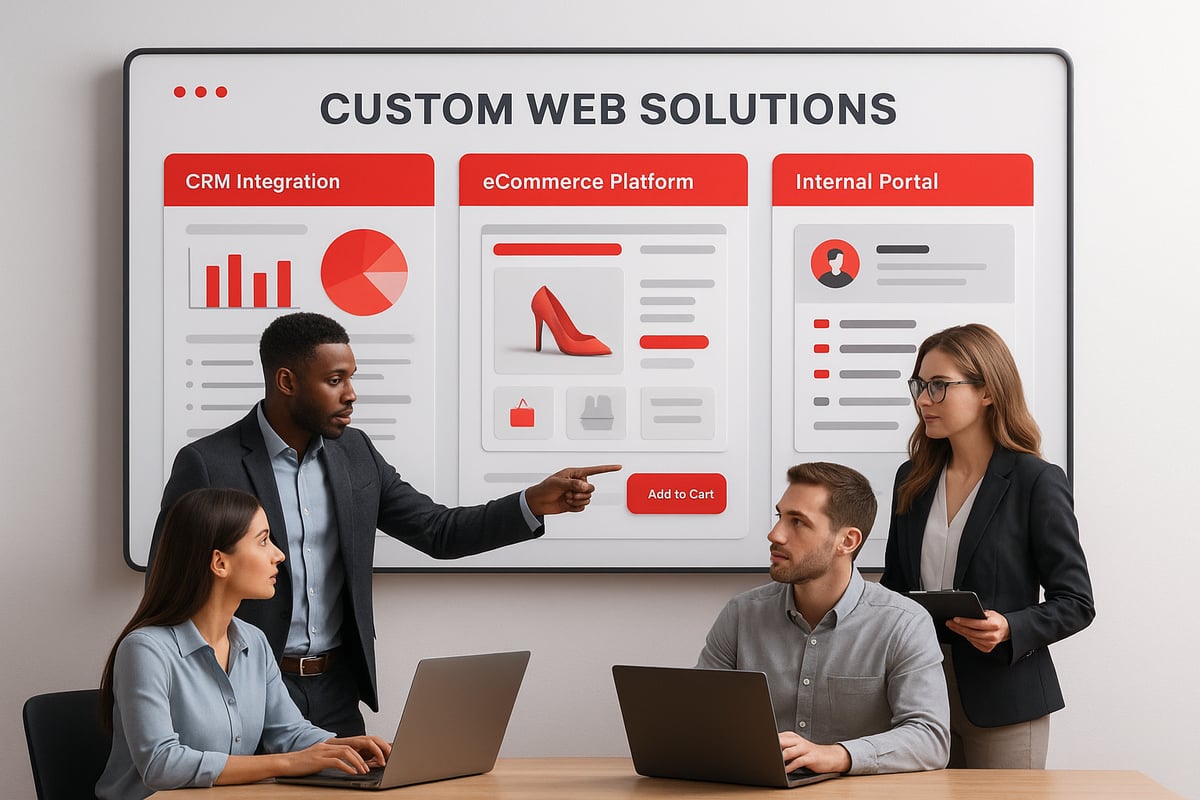
Custom web solutions are digital platforms designed and developed to fit the exact requirements of a business. Unlike template-based sites, which offer limited flexibility, custom web solutions can range from straightforward bespoke websites to advanced web applications with complex integrations.
Key characteristics include tailored functionality, scalability, and a unique user experience. For example, a business might require CRM integration, a custom eCommerce platform, or a secure intranet portal. According to Custom Web Design Services, more organisations are adopting these solutions to achieve differentiation and long-term value.
Industry reports reveal that the adoption of custom web solutions is on the rise as businesses seek alternatives to generic platforms that cannot keep pace with evolving needs.
Core Benefits for Modern Businesses
The core benefits of custom web solutions are significant. These platforms offer enhanced flexibility, allowing organisations to match digital workflows to real-world processes. Improved security and data privacy controls are built in from the start, supporting compliance and peace of mind.
Scalability is another major advantage. Custom web solutions can grow alongside your business, adapting to new requirements and increasing traffic. Integration with third-party systems, such as payment gateways and APIs, becomes seamless and reliable.
A real-world example is a company that streamlines its internal operations through a custom intranet, automating manual tasks and improving efficiency across teams.
Common Types of Custom Web Solutions
Modern businesses rely on a variety of custom web solutions to stay competitive. Common types include:
- Bespoke websites and advanced web applications
- Custom eCommerce platforms tailored for specific markets
- API development and third-party integrations
- Secure internal portals and intranets
- Industry-specific solutions, such as platforms for healthcare or education
Competitor research shows that organisations in retail, healthcare, and education are increasingly investing in these approaches to address unique challenges and opportunities.
The Step-by-Step Process of Developing Custom Web Solutions
Every successful journey with custom web solutions begins with a proven process. Let’s break down each crucial phase, so you know what to expect and how to set your project up for success.

Discovery and Requirements Gathering
The foundation of effective custom web solutions is a thorough discovery phase. This step involves engaging stakeholders through interviews and workshops to capture business goals and pain points.
Teams define clear objectives, outline KPIs, and audit existing systems to identify gaps. User journey mapping and persona development ensure your solution addresses real needs, not just assumptions.
For instance, a detailed requirements process can prevent costly revisions later. Reviewing Bespoke Website Project Examples from successful projects highlights how careful planning results in streamlined, impactful custom web solutions.
Solution Architecture and Planning
Once requirements are clear, the next stage is translating them into a technical blueprint. Solution architects select the right tech stack and platforms that align with project goals for custom web solutions.
Wireframing and prototyping help visualise the user experience before development starts. The planning process addresses scalability, security, and compliance needs upfront. Setting realistic timelines and milestones ensures that everyone understands the project’s path and expectations.
By documenting each step, teams avoid misunderstandings and lay the groundwork for a robust custom web solutions build.
Design and User Experience (UX)
Design and UX are pivotal to the success of custom web solutions. Bespoke UI/UX design enhances user engagement and drives conversions by aligning with brand identity and audience preferences.
Accessibility and responsive design are essential for reaching all users, regardless of device or ability. Iterative cycles of feedback and user testing allow teams to refine features continuously. A/B testing design elements can reveal what truly resonates with users, leading to higher conversion rates.
Prioritising these design principles ensures your custom web solutions deliver a seamless, enjoyable experience.
Development, Testing, and Launch
With the plan and design in place, development for custom web solutions begins. Agile methodologies break the work into manageable sprints, allowing for flexibility and progress tracking.
Integration with APIs, databases, and third-party tools enables the solution to fit seamlessly into your business ecosystem. Rigorous quality assurance, using both automated and manual testing, ensures reliability.
The deployment phase includes staging, go-live support, and post-launch monitoring. Ongoing optimisation helps your custom web solutions adapt and scale as your business grows.
Key Technologies and Platforms for Custom Web Solutions
Staying ahead in digital transformation means choosing the right technologies for your custom web solutions. The tech stack you select directly impacts scalability, integration, and long-term success. Let us explore the essential components shaping modern custom web solutions in 2026.

Front-End and Back-End Technologies
At the heart of custom web solutions are robust front-end and back-end technologies. JavaScript remains a dominant language, powering dynamic interfaces with frameworks like React, Vue.js, and Angular. These tools deliver interactive, responsive experiences across devices.
On the back end, Node.js, Laravel (PHP), and Django (Python) enable developers to build scalable, secure, and fast applications. The choice of framework depends on your business goals, user needs, and technical requirements. Selecting the right stack is vital for performance, integration, and future growth of custom web solutions.
Content Management Systems (CMS) and eCommerce Platforms
A flexible CMS is often the engine behind custom web solutions. Craft CMS and WordPress offer extensive customisation, while headless CMS options allow content to be delivered across channels. For online retailers, Shopify and Magento provide robust eCommerce foundations, but truly custom builds can unlock unique workflows and features.
Choosing between these platforms depends on scalability, ease of use, and integration needs. For a deeper look at tailored eCommerce platforms, see Custom eCommerce Web Development. The right CMS or eCommerce solution ensures your custom web solutions remain agile and future-ready.
PlatformStrengthsConsiderationsCraft CMSHighly customisableRequires developer expertiseWordPressUser-friendly, flexibleSecurity, plugin bloatShopifyReliable, scalableLimited customisationMagentoFeature-rich, powerfulResource-intensive
API Development and System Integrations
Modern custom web solutions thrive on seamless integrations. RESTful and GraphQL APIs enable communication between your website, CRMs, ERPs, and payment gateways. This connectivity drives efficiency and data accuracy.
Examples include custom APIs for inventory management or integrating sales automation tools. By connecting systems, custom web solutions centralise operations, reduce manual tasks, and support business growth. Future-proof integration capability is essential for scaling and adapting to market changes.
Security, Performance, and Scalability Considerations
Security is non-negotiable in custom web solutions. Implementing SSL, data encryption, and regular audits protects sensitive information. Optimising speed and uptime ensures a smooth user experience. Planning for traffic spikes and growth allows your platform to evolve alongside your business.
Integrating Custom Web Solutions with Business Operations
Modern businesses recognise that digital transformation is only as effective as its integration into daily operations. Adopting custom web solutions is not just about technology, but about aligning digital tools with real-world processes. The right approach ensures efficiency, transparency, and measurable impact across the entire organisation.
Aligning with Business Processes
Custom web solutions deliver value when they fit naturally into established workflows. Mapping current processes is the first step, revealing pain points and opportunities for automation. For example, eCommerce businesses often streamline order processing by integrating custom dashboards with inventory and shipping systems.
Benefits of aligning digital solutions with business processes:
- Automates repetitive tasks, reducing manual errors
- Connects disparate tools for unified operations
- Provides real-time visibility into key activities
By embedding custom web solutions into daily routines, organisations can boost productivity and responsiveness. The result is a more agile business, ready to adapt as needs evolve.
Data Management and Analytics
Centralising data is critical for gaining actionable insights. Custom web solutions enable businesses to integrate analytics tools such as Google Analytics or bespoke dashboards, consolidating information from multiple sources.
Advantages of robust data management include:
- Real-time performance tracking across departments
- Enhanced decision-making based on accurate data
- Continuous improvement through measurable KPIs
A practical example involves a company using custom web solutions to unify sales, support, and product data, allowing leadership to spot trends and optimise strategies. This data-driven approach positions businesses for sustainable growth.
Training, Support, and Change Management
Successful integration of custom web solutions depends on effective onboarding and support. Teams must understand how to use new tools and why the changes matter. Providing clear documentation, hands-on training, and responsive support helps drive adoption.
Key steps for smooth change management:
- Conduct interactive training sessions for staff
- Offer accessible guides and FAQs
- Maintain open channels for feedback and troubleshooting
Managing resistance to change is essential. When employees see how custom web solutions simplify their work, adoption rates increase. For example, a business launching a new intranet with tailored features saw rapid staff engagement and improved collaboration.
Choosing the Right Partner for Your Custom Web Solution
Selecting the right partner for custom web solutions is a pivotal decision for any business. The right agency brings technical expertise, industry knowledge, and a proven track record of delivering tailored results. Begin by carefully reviewing a potential partner’s portfolio, focusing on projects similar to your industry and objectives. Examine client testimonials and case studies for evidence of successful collaboration and measurable outcomes.
Transparent communication is vital. Ask about their project management processes and how they address challenges. For more in depth guidance on what to look for, see these Web Development Agency Insights, which outline essential criteria for choosing an agency that aligns with your vision. By prioritising these factors, businesses position themselves for long term success with custom web solutions.
Partner with Futur Media for Bespoke Web Solutions
Futur Media stands out as a Cardiff based creative agency, specialising in custom web solutions, Shopify, and Craft CMS. With a comprehensive offering, the team delivers bespoke web design, tailored eCommerce platforms, and strategic digital marketing.

Their expertise covers platforms like Shopify, Craft CMS, and SEO. Each project is built for performance and conversion. Whether you need web design, Shopify web design, Shopify development, or Shopify migration, Futur Media crafts digital experiences around your business goals.
Their commitment to custom web solutions ensures your platform is unique, scalable, and ready to drive growth.
Budgeting and Project Management Best Practices
Navigating the budgeting process for custom web solutions requires a clear understanding of your project’s scope and complexity. Always set realistic budgets that cover all phases, including design, development, and post launch support. Using a phased delivery approach allows for agile adjustments and reduces risk.
Document requirements thoroughly to minimise the chance of scope creep. Regularly review milestones and measure ROI to ensure your investment delivers results. Select a partner who values transparency and offers proactive communication throughout the project lifecycle.
By following these best practices, businesses can manage costs effectively and maximise the value of their custom web solutions.
Future-Proofing Your Custom Web Solution: Trends for 2026 and Beyond
Staying ahead in the digital landscape requires organisations to anticipate change and evolve proactively. As businesses invest in custom web solutions, understanding the trends shaping 2026 and beyond is crucial for long-term success. Forward-thinking strategies ensure your digital platforms remain effective, compliant, and adaptable in a rapidly shifting market.
Embracing Emerging Technologies
The future of custom web solutions is deeply influenced by advancements in artificial intelligence, automation, and new user interfaces. AI-driven personalisation allows businesses to offer bespoke experiences, while chatbots and conversational UIs streamline customer engagement. Progressive Web Apps (PWAs) deliver native app-like performance across devices, supporting mobile-first strategies.
Voice interfaces are gaining traction, making digital platforms more accessible and intuitive. According to Web Development Trends 2026, these technologies are set to become standard features for custom web solutions. For example, AI-powered recommendation engines in eCommerce are already boosting conversion rates and customer satisfaction. Staying abreast of these innovations will help your business maintain a competitive edge.
Sustainability, Accessibility, and Compliance
Modern custom web solutions should prioritise sustainability, inclusivity, and legal compliance. Eco-friendly web builds reduce energy consumption, supporting corporate environmental goals. Accessibility is non-negotiable, with WCAG 2.2 compliance ensuring digital products are usable for everyone, including those with disabilities.
Adherence to evolving data privacy laws, such as GDPR and UK-specific regulations, is vital to avoid penalties and build customer trust. Integrating these principles into your custom web solutions not only reduces risk but also broadens your audience reach. Embracing these responsibilities reflects a forward-thinking, responsible brand image.
Preparing for Continuous Evolution
Continuous improvement is essential for future-proofing custom web solutions. Regular updates, iterative enhancements, and flexible architecture make it easier to integrate new technologies as market demands change. Adapting a custom platform to shifting business goals ensures ongoing relevance and lasting value.
As you’ve seen throughout this guide, planning and executing a custom web solution isn’t just about keeping up with technology—it’s about empowering your business to stand out, adapt, and thrive in 2026 and beyond. Whether you’re looking to enhance your digital presence, streamline operations, or deliver a seamless user experience, the right partnership makes all the difference. If you’re ready to take the next step and put these insights into practice, let’s explore how your ideas can become a high-performing digital reality together.
Start Project